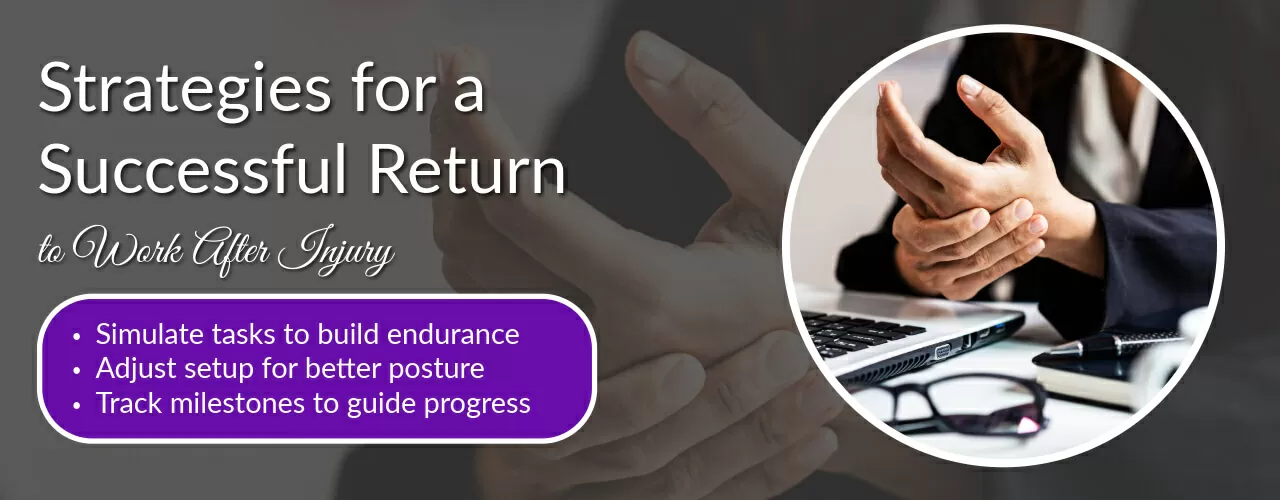
Returning to work after an injury is often more complicated than expected. Many patients face ongoing pain, limited mobility, and uncertainty about when and how to resume their job responsibilities. Without proper guidance, the transition can feel overwhelming. That is why having effective return to work strategies in place is essential for long-term recovery and job performance. Physical therapy plays a key role in this process by preparing the body and mind for the demands of work in a safe, gradual way.
At Peak Orthopedic Physical Therapy, we support patients through every stage of their recovery, offering expert treatment and practical strategies that lead to successful outcomes.
Pain, Fear, and Frustration: What Makes Returning to Work So Challenging?
After an injury, the body needs time to heal and regain strength. However, returning to work too soon or without a plan can lead to setbacks. Patients often report:
- Lingering pain or stiffness during routine tasks
- Difficulty lifting, bending, or standing for long periods
- Fear of re-injury or making the pain worse
- Fatigue or reduced endurance
- Anxiety about keeping up with job duties or coworkers
Some believe they must be completely pain-free before resuming work. Others try to “push through” pain, risking further damage. Both approaches can slow recovery and reduce confidence. The best path forward includes tailored return to work strategies that match your condition, your job, and your recovery timeline.
Physical Therapy: The Foundation of a Safe Return to Work
At Peak Orthopedic Physical Therapy, physical therapists help patients recover from workplace injuries, surgical procedures, or chronic conditions that interfere with job performance. We begin with a full assessment of your mobility, strength, balance, and endurance. From there, we build a plan that focuses on safe movement and a progressive return to normal function.
Common treatments include:
- Manual therapy to improve joint mobility and reduce tissue tension
- Functional strength training to build capacity in job-specific movements
- Postural retraining to prevent re-injury and promote long-term alignment
- Endurance conditioning for patients with physically demanding roles
- Movement education to restore safe lifting, carrying, or reaching mechanics
Physical therapy sessions also help patients rebuild confidence, which is just as important as physical strength in the return-to-work process.
Return to Work Strategies: Planning for Long-Term Success
Successful return to work strategies are not one-size-fits-all. They need to be practical, job-specific, and designed to match your recovery timeline. Here are several evidence-based strategies used by therapists at Peak Orthopedic Physical Therapy to guide patients back to work safely.
1. Set Clear Recovery Milestones
Returning to work should follow a step-by-step plan with measurable goals. These may include walking a set distance, standing for a specific time, or completing a lifting task without pain.
What To Do
Work with your therapist to define these milestones and monitor progress at each session. Knowing what to expect reduces anxiety and supports realistic planning.
2. Simulate Job Tasks in Therapy
Reintroducing job-specific activities during physical therapy helps ensure you are ready for your job’s physical demands.
What To Do
Practice tasks like squatting, climbing stairs, or using tools under supervision. Your therapist will adjust movements to ensure safety while building endurance.
3. Improve Ergonomics at Work
Workplace setup can make a major difference in comfort and recovery.
What To Do
Ask your therapist for ergonomic tips based on your role. This might include adjusting chair height, positioning your computer screen, or using a lift-assist device.
4. Maintain Consistency with Home Exercises
Home exercises bridge the gap between clinic visits and real-world demands.
What To Do
Stick to your prescribed home routine. Even short daily sessions help maintain strength and mobility and reduce the risk of flare-ups once you return to full duties.
5. Pace Your Activity During the Day
Jumping back into full-speed work can lead to setbacks.
What To Do
Use short breaks to stretch or shift positions. Schedule heavier tasks earlier in the day and alternate between physical and light activities when possible.
Ready to Return to Work with Confidence?
The transition back to work should feel like a milestone, not a setback. With expert support and personalized return to work strategies, you can build the strength, control, and confidence needed to succeed in your job without pain holding you back.
Contact Peak Orthopedic Physical Therapy today to begin your recovery plan. Our team is here to help you heal fully, move better, and return to work ready for what comes next.