How Strength Training Can Improve Your Health
In the past, many people associated strength training with oiled-up, musclebound bodybuilders — and, as such, decided strength training wasn’t the workout for them. But that idea couldn’t be farther from the truth! In a way, we get it. Strength training can be incredibly intimidating if you’re coming at it cold: you have to grapple with unfamiliar equipment, uncertainty about proper lifting techniques, and confusion about which exercises to perform. But once you find your footing, strength training is one of the best things you can do for your overall health and wellness.
At Peak Ortho, we want to help make strength training accessible to all, regardless of age, health history, or ability level. To help you see the many benefits of strength training, we thought we’d share the stories of two patients: Alisha and Michelle. Both of these patients are ordinary women in their late 50s. Neither were hardcore athletes. But both discovered the benefits of strength training for health.
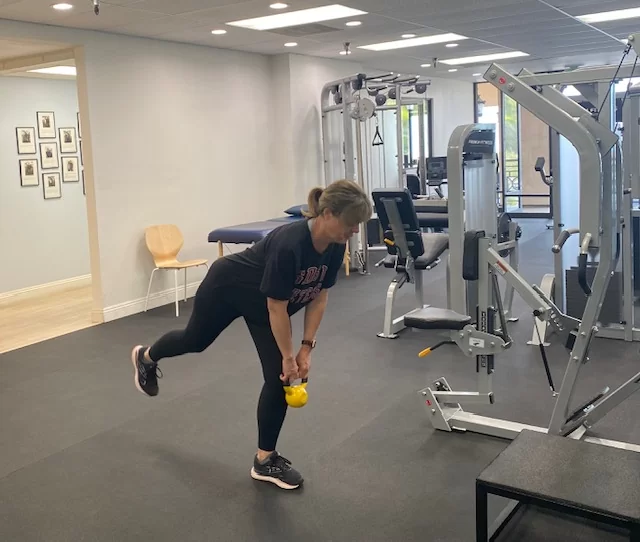
Alisha: A New Hobby in Middle Age
Alisha first came to see us after she injured her back while working in the garden. Like most older people, Alisha’s muscle mass had been steadily decreasing, and the resulting weakness had ultimately led to her injury.
We provided her with a customized treatment plan, including dedicated strength training focused on Alisha’s core and back. She was surprised by how much she enjoyed the exercises, including how great she felt after completing them.
As her rehabilitation neared completion, Alisha asked her physical therapist for more information about strength training. She had heard it was an important piece of osteoporosis prevention, something that had been in the back of her mind since the condition ran in her family.
We were more than happy to help Alisha out. Her therapist helped her develop a general strength training program using barbells and dumbbells. He walked her through each exercise, assessed her lifting form, and guided her on gradually increasing intensity.
The result? Alisha found a new hobby. She became an avid weightlifter, hitting the gym three times a week. Even better, she restored some of her lost muscle mass, and her garden activities became easier over time.
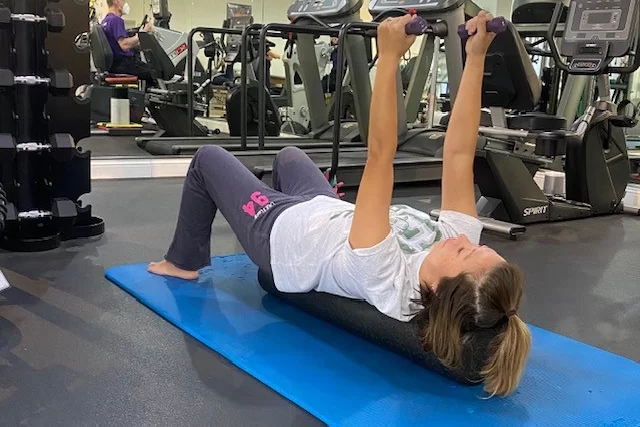
Michelle: A Resistance to Resistance Training
Michelle had developed osteoarthritis in her hips in her mid-50s. Although the pain wasn’t severe, she did find herself becoming less active than she’d prefer. Eventually, she contacted us for help managing and slowing her condition.
Regular exercise is one of the best ways to manage osteoarthritis pain, but Michelle was nervous about doing anything too strenuous — including strength training. She was especially wary of anything involving heavy weights.
However, strength training is an important piece of osteoarthritis management. Strong muscles stabilize and support the impacted joints, helping to relieve pressure (and symptoms).
Michelle’s physical therapist was sympathetic to her concerns, especially since low-impact exercises are generally better for people with osteoarthritis. To that end, she suggested Michelle start with a daily walking regimen, which would help get her used to physical activity while still building some muscle strength and endurance.
After a few weeks, Michelle’s therapists started her on simple bodyweight exercises that wouldn’t put too much pressure on her knee joints. They weren’t as difficult or painful as Michelle feared, and she eventually decided she wanted to add a little more resistance after all.
But she didn’t go all in with heavy barbells, as Alisha had. Instead, Michelle used a blend of resistance bands and light dumbbells. Her therapist provided the necessary guidance — and before Michelle knew it, she was performing strength training routines twice a week.
The result? Less pain and stiffness from Michelle’s arthritis meant more mobility and an easier time running errands, doing chores, and spending time with her loved ones.
Speed Up Your Recovery With Our Additional Services
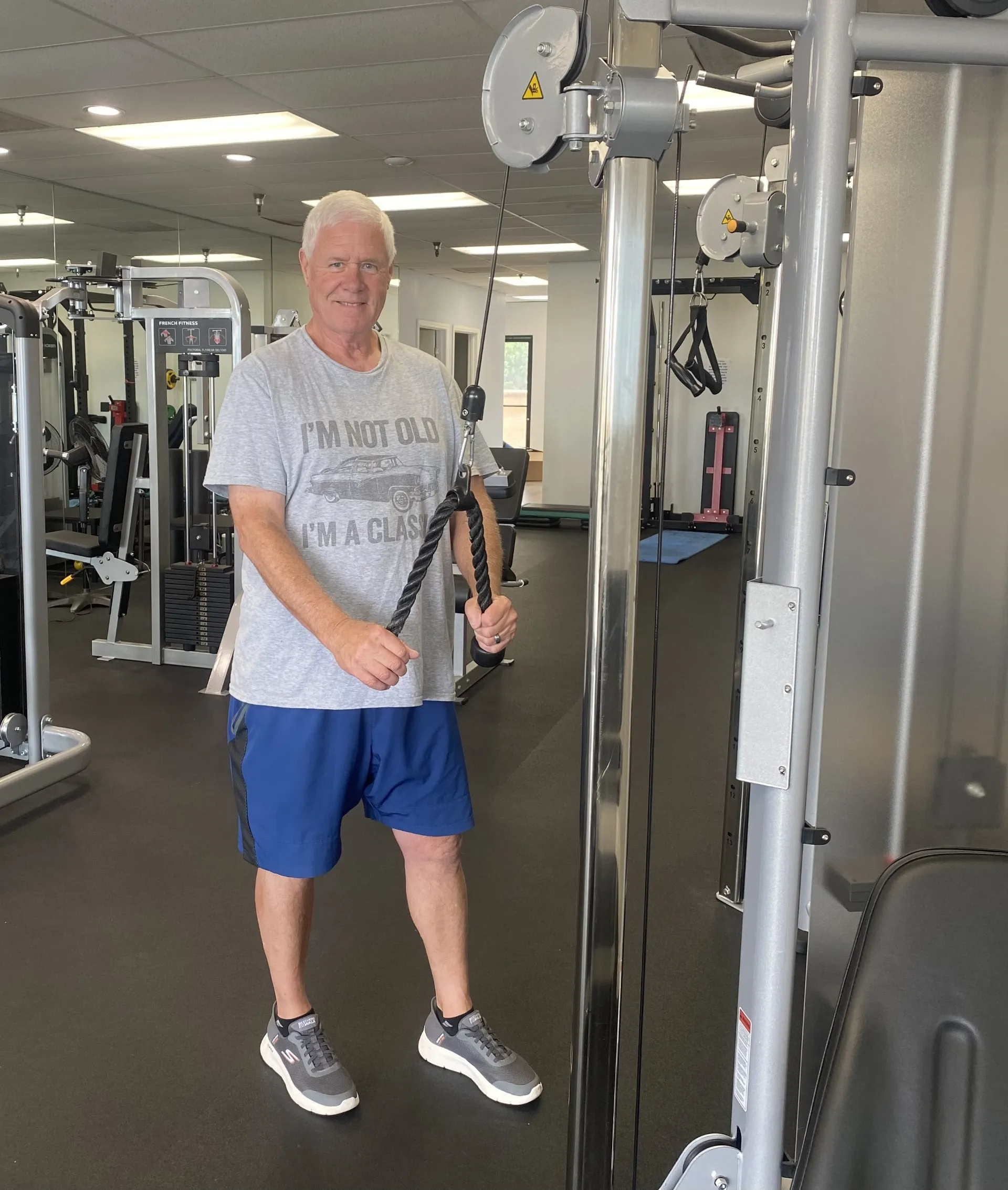
- Peak Fitness (gym membership that includes fitness assessment, custom workout program and supervision)
- Medical Massage (massage with special attention to medical conditions or injuries)
- Deep Tissue Laser Therapy (Lightforce Class IV Laser for reducing pain and speeding up healing)
- Pain Management and Home Exercise Products
Sarcopenia: A Quick Dive
There’s no denying that aging causes a host of physical and mental changes. One of the more significant of these is a decrease in muscle mass. For most people, it begins in their 30s and 40s, then jumps into high gear in their 60s. Age-related muscle mass loss happens to everyone to some extent. However, some people suffer loss of muscle mass, strength, and endurance to such a degree that it severely compromises their ability to be physically active. This condition is known as sarcopenia.
Symptoms, Causes, and Effects
Sarcopenia primarily stems from the effects of aging and, as such, primarily affects people 60 years or older. Certain risk factors can make it more likely that you develop sarcopenia, including the following:
- A sedentary lifestyle
- Chronic diseases, including diabetes and kidney disease
- Inadequate protein
- A decline in certain bodily functions related to building muscle
People with sarcopenia lose their muscle mass more quickly than those who don’t, which leads to muscular weakness and overall frailty. This, in turn, can negatively affect your quality of life. You may…
- Lose stamina more quickly
- Have difficulty with mobility, including walking or climbing stairs
- Have poor balance and be more likely to fall
- Find daily activities more difficult
How Peak Ortho Helps with Sarcopenia
The good news is that you can manage sarcopenia with a few simple lifestyle changes, namely regular physical activity and improved nutrition. These factors can also help prevent sarcopenia or delay its progression. However, remember that some muscle mass loss is just part of getting older. What’s not an inevitable part of aging, however, is losing mobility and independence. Our physical therapists can help keep you active well into old age!
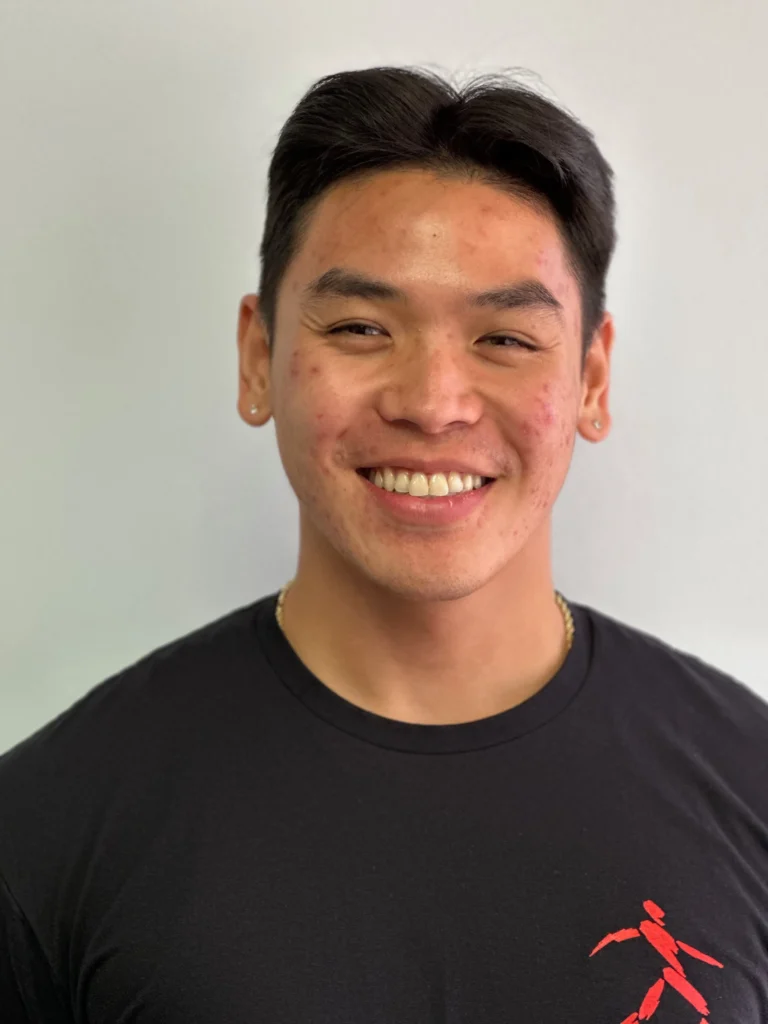
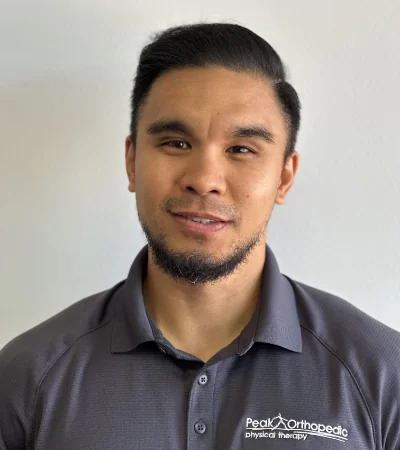
Staff Spotlight: Ceasar Nonga, DPT
We’re excited to welcome Ceasar Nonga, DPT, to our team at Peak Orthopedic Physical Therapy, working in our Torrance clinic.
Ceasar brings a dynamic background and specialized training to support our patients in achieving their recovery goals. He earned his B.S. in Kinesiology with a focus on Exercise Science from California State University, Long Beach, and completed his Doctor of Physical Therapy degree at the University of St. Augustine for Health Sciences in 2023.
His diverse clinical background includes rotations at Southland Physical Therapy, EmpowerMe Wellness, and Concentra, giving him hands-on experience in outpatient orthopedics, skilled nursing facilities, and assisted living settings.
Outside of the clinic, Ceasar enjoys staying active with tennis, pickleball, and weightlifting, and values quality time with family and friends.
We’re thrilled to have Ceasar join our team and bring his expertise and passion for patient care to Peak Orthopedic Physical Therapy. If you see him around, be sure to give him a warm welcome!
How Will Strength Training Benefit You?
Good health means different things to different people. At Peak Ortho, we focus on improving your overall function so you can do the things in your life that matter most. Whether you want to kickstart an intense strength training program (like Alisha) or simply ensure you’re meeting the CDC’s recommendation of 2 days of muscle strength work a week (like Michelle), we’ve got you covered. Call us today to get started on your strength training journey!